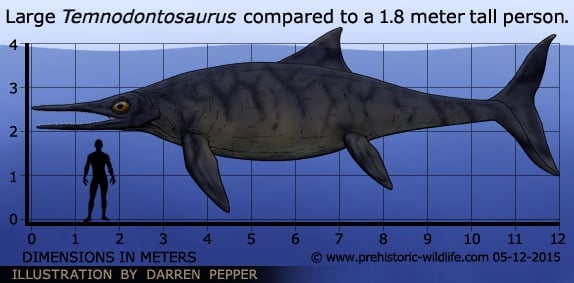
Temnodontosaurus

Megalodon

Mobil James Bond bakal Disulap Jadi Mobil Selam Sungguhan

XL Bidik 40 Persen Pelanggan Gunakan E-Channel

Idm 6.17 Full Version Download With Patch 100% working.

Showing posts with label Little Fish. Show all posts

Tuesday, January 7, 2014

Five Of the Rarest Marine Aquarium Fish

Five Of the Rarest Marine Aquarium Fish
Edwardchristhoper.blogspot.com - You may have seen mollies and guppies countless times at your local fish store or pet shop but once you’ve been keeping tanks for a long time, you might reach out for something more exotic. Some so called “rare” fish that you may see for sale may cost fifty to one hundred dollars but if you’ve got the coin, there’s fish in the sea that cost beaucoup bucks.
Before telling you about the rarest of the rare aquarium fish, keep in mind that these fish are not rare in the wild, but they are very hard to come by. Some live far, far away. Some live very, very deep. Some live far, far away and very, very deep. In any case, here are the five rarest and most coveted fish for marine (saltwater) aquariums.
Candy Basslet
This Caribbean beauty is called the candy basslet
#5 The candy basslet is a beautiful yellow and blue fish from the Caribbean. It is found all over but they are mostly collected from Curacao. They are easy to keep, easy to feed and they look every bit as beautiful in pictures as they do in real life, and there has been some success in breeding them in captivity.

Dr. Seuss Fish
belonoperca-pylei
Dr. Seuss Fish have become somewhat available in recent years
#4 The Dr. Seuss Fish is so named for its wild color pattern, strange body and equally bizarre looking face. Like our number five, the Dr. Seuss Fish is a basslet which lives at pretty decent depths of Palau and the Marshall Islands. These are also easy to keep and although there’s been a little bit of collection of this fish in recent past, we’re still talking around a dozen specimens carefully brought up from the depths each year.

Neptune Grouper
Regularly eaten as food fish in Japan, the live ones make awesomely rare aquarium residents
#3 The Neptune Grouper is so rare that it is barely known about in the aquarium world at all. This deepwater denizen is a staple food fish in Japan and East Asia but it is almost never seen alive in an aquarium. The Neptune Grouper lives so deep that when they are fished for food they are brought up quickly, and they die from decompression. Only a handful of live juveniles have been found and collected in water shallow enough that they make suitable aquarium inhabitants.

Masked Angelfish
The bright white and vivid orange color of the masked angelfish gives it a special appearance
#2 The Masked Angelfish is a mostly white fish that lives in the Hawaiian Islands. This fish is common along most of the Hawaiian Chain, if you know where to look. Most of the Hawaiian Islands is protected and where it is, the Masked Angelfish lives at the reasonable depths of 100-300 feet. But where the masked angelfish is legal to collect, divers must often dive to 300 to 400 feet deep, a very dangerous feat not accomplished by many and one collector has died from diving complications in his quest to collect a masked angelfish.

Peppermint Angelfish
Coming from far away and very very deep, the peppermint angelfish is the holy grail of rare aquarium fish
#1 Ask any saltwater aquarium lover what is the rarest fish in the world and they will invariably tell you the Peppermint Angelfish. Adorned in beautiful red and white stripes, this species is found in the South Pacific, in only a couple locales and at a very profound depth. If you should so happen to find yourself in the Cook Islands, and if you should so happen to get your dive rig safely down to 400 feet, you still have the daunting task of actually catching this fish which prefers to stay close to very convoluted reef rock. Due to its remoteness, complex habitat and extreme depth, the Peppermint Angelfish is the holy grail of rare reef fish.

Jake Adams is the managing editor of ReefBuilders.com where they cover everything there is to know about saltwater tanks and coral reef aquariums. 

Source : http://www.thefeaturedcreature.com

Wednesday, November 13, 2013

Little and Dangerous Fish

Pufferfish


Photo: Pufferfish
Pufferfish are poor swimmers, but can quickly ingest huge amounts of water to turn themselves into a virtually inedible ball several times their normal size.
Photograph by Chris Laughlin/Animals Animals-Earth Scenes

Map

Map: Pufferfish range Pufferfish Range

Fast Facts

Type:
Fish
Diet:
Carnivore
Size:
Up to 3 ft (1 m)
Group name:
School
Did you know?
Some predators, such as tiger sharks and sea snakes, are unbothered by the pufferfish’s natural toxins.
Size relative to a tea cup:
Illustration: Pufferfish compared with tea cup
Biologists think pufferfish, also known as blowfish, developed their famous “inflatability” because their slow, somewhat clumsy swimming style makes them vulnerable to predators. In lieu of escape, pufferfish use their highly elastic stomachs and the ability to quickly ingest huge amounts of water (and even air when necessary) to turn themselves into a virtually inedible ball several times their normal size. Some species also have spines on their skin to make them even less palatable.
A predator that manages to snag a puffer before it inflates won’t feel lucky for long. Almost all pufferfish contain tetrodotoxin, a substance that makes them foul tasting and often lethal to fish. To humans, tetrodotoxin is deadly, up to 1,200 times more poisonous than cyanide. There is enough toxin in one pufferfish to kill 30 adult humans, and there is no known antidote.
Amazingly, the meat of some pufferfish is considered a delicacy. Called fugu in Japan, it is extremely expensive and only prepared by trained, licensed chefs who know that one bad cut means almost certain death for a customer. In fact, many such deaths occur annually.
There are more than 120 species of pufferfish worldwide. Most are found in tropical and subtropical ocean waters, but some species live in brackish and even fresh water. They have long, tapered bodies with bulbous heads. Some wear wild markings and colors to advertise their toxicity, while others have more muted or cryptic coloring to blend in with their environment.
They range in size from the 1-inch-long (2.5-centimeter-long) dwarf or pygmy puffer to the freshwater giant puffer, which can grow to more than 2 feet (61 centimeters) in length. They are scaleless fish and usually have rough to spiky skin. All have four teeth that are fused together into a beak-like form.
The diet of the pufferfish includes mostly invertebrates and algae. Large specimens will even crack open and eat clams, mussels, and shellfish with their hard beaks. Poisonous puffers are believed to synthesize their deadly toxin from the bacteria in the animals they eat.
Some species of pufferfish are considered vulnerable due to pollution, habitat loss, and overfishing, but most populations are considered stable.

Anglerfish


Photo: A close-up of an anglerfish
Looking like something out of a science fiction movie, the anglerfish uses a natural lure to draw its next meal nearer.
Photograph by Bruce Robison/Corbis

Map

Map: Anglerfish range Anglerfish Range

Fast Facts

Type:
Fish
Diet:
Carnivore
Size:
8 in (20 cm) up to 3.3 ft (1 m)
Weight:
Up to 110 lbs (50 kg)
Group name:
School
Did you know?
The anglerfish's lighted lure glows with the help of millions of bioluminescent bacteria.
Size relative to a tea cup:
Illustration: Anglerfish compared with tea cup
The angry-looking deep sea anglerfish has a right to be cranky. It is quite possibly the ugliest animal on the planet, and it lives in what is easily Earth's most inhospitable habitat: the lonely, lightless bottom of the sea.
There are more than 200 species of anglerfish, most of which live in the murky depths of the Atlantic and Antarctic oceans, up to a mile below the surface, although some live in shallow, tropical environments. Generally dark gray to dark brown in color, they have huge heads and enormous crescent-shaped mouths filled with sharp, translucent teeth. Some angler fish can be quite large, reaching 3.3 feet (1 meter) in length. Most however are significantly smaller, often less than a foot.
Their most distinctive feature, worn only by females, is a piece of dorsal spine that protrudes above their mouths like a fishing pole—hence their name. Tipped with a lure of luminous flesh this built-in rod baits prey close enough to be snatched. Their mouths are so big and their bodies so pliable, they can actually swallow prey up to twice their own size.
The male, which is significantly smaller than the female, has no need for such an adaptation. In lieu of continually seeking the vast abyss for a female, it has evolved into a permanent parasitic mate. When a young, free-swimming male angler encounters a female, he latches onto her with his sharp teeth. Over time, the male physically fuses with the female, connecting to her skin and bloodstream and losing his eyes and all his internal organs except the testes. A female will carry six or more males on her body.

Source : http://www.nationalgeographic.com/